


A data model solves a lot of the problems that come with scattered data. It's a mechanism to organize your data, analyze it, and group it together so it can be used for self-service, and it's now also the deciding factor in whether your AI tools give you accurate answers or just guess. Skip it, and every new metric means rebuilding a report and reconciling numbers your team no longer trusts. Build it once, and you get faster closes, self-service reporting, and AI that actually works on your data instead of against it.
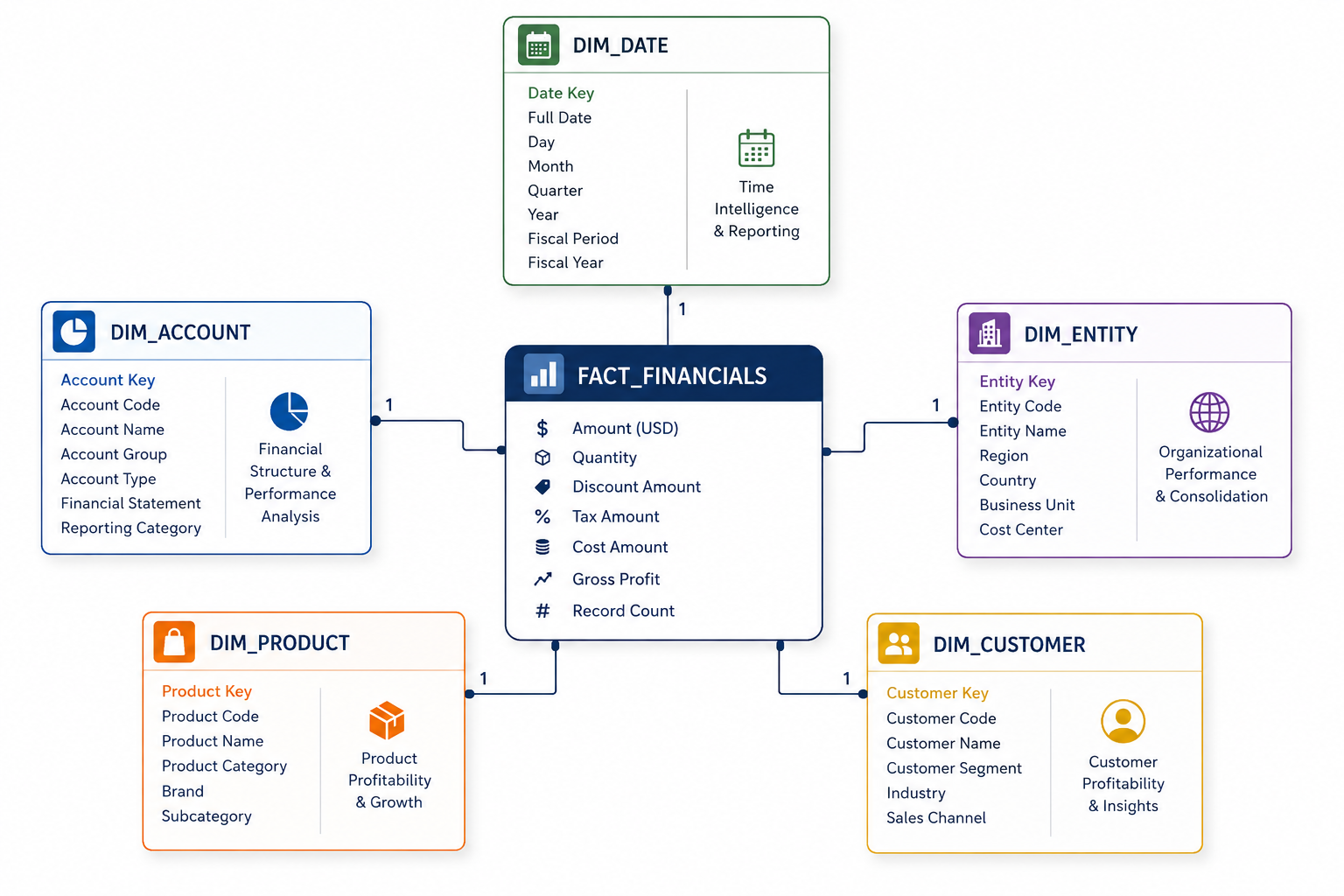
The Temptation
When finance teams need a report fast, the easy path is to connect straight to the ERP and pull the raw numbers together. And it works. At first.
But the moment you add a new business unit, a new KPI the board wants to see, or a system from an acquisition, the cracks show. Every new request means rebuilding something from scratch. Numbers stop matching between reports. Your team spends more time reconciling than analyzing. And eventually, someone in a leadership meeting asks why two reports show two different revenue figures, and nobody has a quick answer.
That's not a tooling problem, it's a structure problem.
Why This Costs You More Than It Looks Like
Skipping the modeling step feels cheaper up front. It isn't. You end up paying for it every single month, in the form of:
- Analyst hours spent rebuilding reports instead of analyzing them
- Numbers that don't reconcile, which erodes trust in your reporting and slows down decisions
- New metrics that take weeks instead of days, because nothing is standardized
- Audit and compliance risk, because there's no single, governed definition of your KPIs
We've built out analytics for enough organizations to know this pattern holds every time: the ones that scale cleanly are the ones that invest in a proper data model before they build reports, not after they've already hit the wall.
What You're Actually Paying For
A data model is the work of organizing your data once, taking everything scattered across your ERP and other systems and grouping it into one clean, consistent structure, so your team isn't doing that work manually every time a report or a new metric is needed.
In practical terms, that means:
- One definition of revenue, margin, and every other KPI, used the same way in every report, every time
- A structure that holds up when you add a system, a business unit, or a new reporting requirement
- Analysts spending their time on analysis, not on rebuilding the same numbers a different way every month
- A foundation your team can stand behind in an audit or a board meeting, because the numbers trace back to source
It's a front-loaded cost. But once it's built, you can use these KPIs every month without needing to rebuild your reports just to add another metric. That's the return: faster closes and fewer surprises.
The Part Most Finance Leaders Haven't Priced In Yet
AI tools like Copilot are moving into finance fast, the promise is asking a plain-language question and getting a reliable number back. But that promise only holds if the data behind it is organized.
Point an AI tool at raw, uncleaned ERP data and it has to guess at what your numbers mean. Guessing shows up as wrong answers, or answers that took an expensive amount of processing to reach, because the AI is doing the cleanup work in real time that should have been done once, ahead of time.
Point it at a proper data model, organized, consistently named, with your KPIs already defined, and the AI has real context to work with. It's easier for the AI to gather that context because the data has already been organized in an efficient manner. The answers come back more accurate, your context window doesn't need to be as large, and you're not spending unnecessary tokens asking the AI to do organizing work it shouldn't have to do.
In other words: building a data model isn't just a reporting investment anymore. It's the same investment that determines whether your AI tools actually deliver value or just create a new source of unreliable numbers. You do the work once, and it pays off twice.
In Summary
The finance teams that scale without chaos all share one thing: they modeled their data before they reported on it, and they treat that model as infrastructure, not an afterthought.
It's not optional. It's what keeps your numbers, and increasingly, your AI, accurate as the business, the questions, and the expectations keep growing.
Want clarity on whether your data is ready for this? We offer a complimentary review of your current environment to help you understand where the gaps are and what your roadmap should look like.